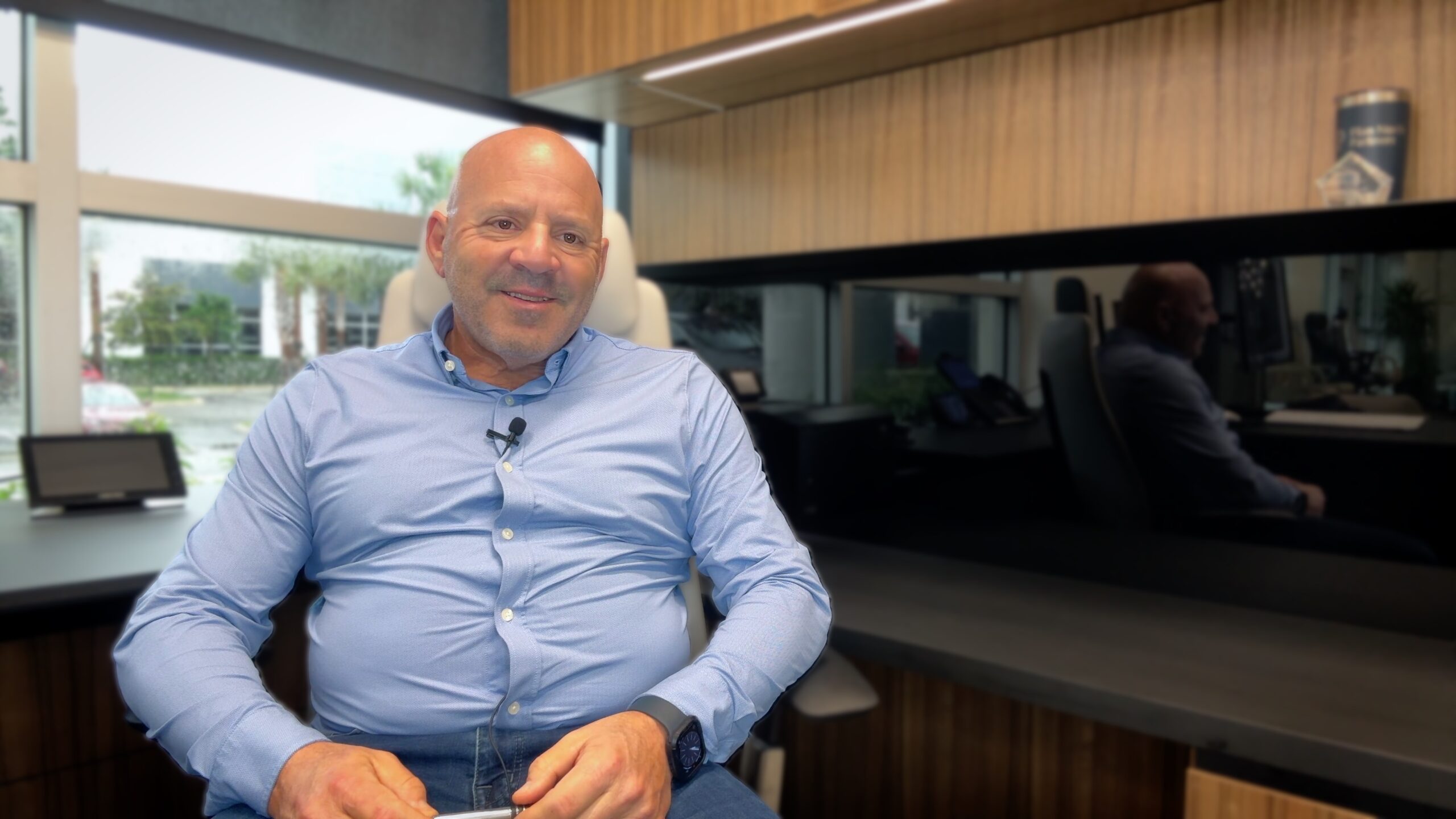







Our Miami healthcare IT team is local and internal, headquartered in your city. We resolve most tickets remotely inside the 29.6-minute average, and deploy a technician on site when hands-on work is needed.
Hurricane season doesn’t take your practice offline. Our support network runs across the country, so a South Florida storm doesn’t take your coverage with it.
If you have an in-house IT lead, our co-managed program fills the skill gaps and covers the tactical load, built for Miami practices that have outgrown a one-person shop.
 Excellent
4.8201 reviews
4.8Excellent201 reviewsPosted on Google
 Aiyana Valdez14 days agoPosted on Google
 IDALIA MURILLO19 days agoRyan is highly professional, provides excellent customer service, and resolves issues promptly.Posted on Google
 darcel gray31 days agoOmg the food is so flavored I had lasagna.Posted on Google
 Alex Cruz31 days agoWe had an urgent server issue that prevented several employees from working. WheelHouse IT responded immediately and had us operational again much faster than anticipated. Their communication during the incident was excellent.Posted on Google
 Brent S. S. Ingraham40 days agoPosted on Google
 Emilio Martinez40 days agoWheelHouse IT has been great to us over the years! Their response time is awesome, they really know their stuff and are always ready to help. When we had a major incident they worked around the clock and got us back up and running ASAP. Really appreciate everything you guys have done for us, definitely recommend! :)Posted on Google
 Carolyn Goldberg46 days agoPosted on Google
 Syed Sarwar Hussain MD63 days agoI am thankful for wheelhouse for their help and support, making my job easierPosted on Google
 Nicole Stenger64 days agoGreat job IT! Thank you as always!Posted on Google
 Gerry Cruickshank67 days agoOur healthcare organization needed an IT provider that understood security, compliance, and the importance of keeping our systems available throughout the day. WheelHouse IT has been reliable and quick to respond whenever an issue arises. Their team communicates clearly and works efficiently to minimize interruptions to our staff and patients.Posted on Google
 Charles Douglas68 days agoWheelHouse IT helped our law firm improve its cybersecurity, Microsoft 365 environment, and data backup procedures. Their team explained everything clearly and worked around our court schedules and client meetings. We now feel much more confident that our sensitive information is properly protected.Posted on Google
 Ricky Gordon71 days agoBest Tech Support Team Ever!!! Being a client since 2018, we have enjoyed rapid responses and 100% success. Our monthly contract fee has become an essential premium assuring our stress-relieving comfort for our technological needs.Posted on Google
 Nicola Mitchell76 days agoAs a busy law firm, we cannot afford extended downtime or delays accessing client files. WheelHouse IT has been responsive, professional, and careful about keeping our systems secure. Their technicians understand the importance of confidentiality and resolve issues without disrupting our attorneys and staff.Posted on Google
 Ralph78 days agoPosted on Google
 I Murillo96 days agoPosted on Google
 Omar Taylor97 days ago
At a 30-person practice, an MFA lockout is an inconvenience. At 150 staff across two or three Miami locations, it’s a queue: clinicians waiting on the front desk waiting on the help desk, every morning, with patients already in the lobby. Your current provider has closed the password tickets. The mornings still look the same. We engineer access so credentials, MFA, and clinical-app sign-on stop colliding. The result is security that doesn’t break the workflow, with a pod that knows your environment well enough to spot the pattern instead of resetting the same account for the third time this quarter.
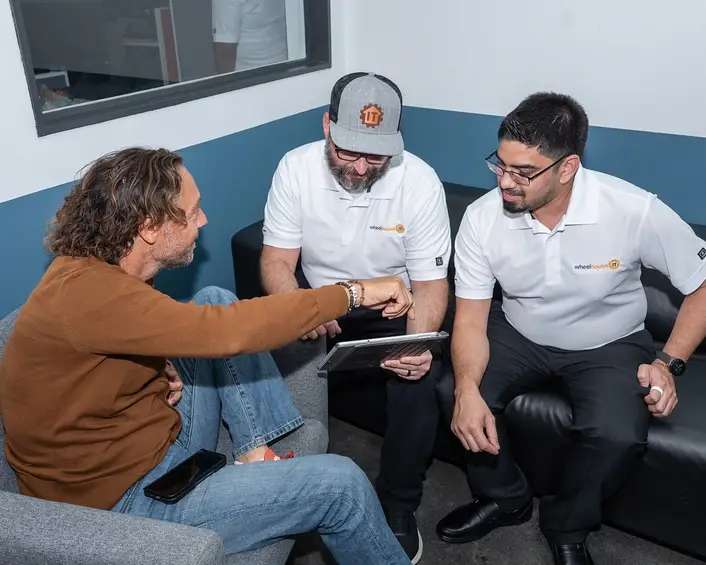
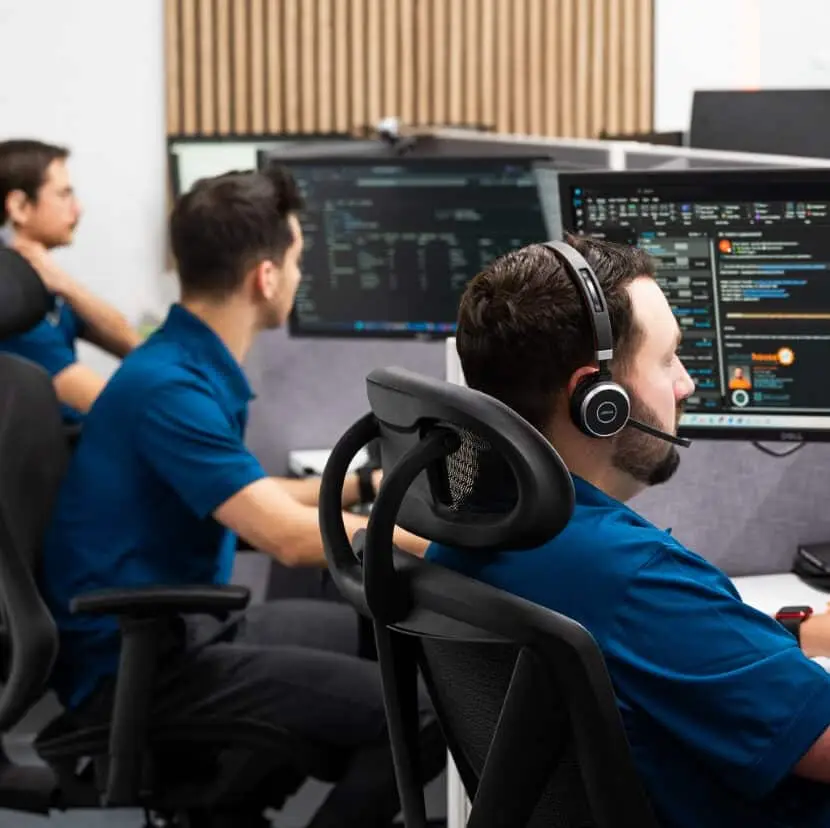
Slow logins at shift change. A lab module that times out. A patient lookup that takes five seconds instead of one. Your staff has built workarounds. Your provider has closed the tickets. The pattern is still there because nobody is watching for it. We watch EHR performance the way you’d watch a clinical metric: continuously, at the integration and infrastructure layer, with the support history feeding back into what we monitor. When the slowdown is a query that needs tuning, we tune it. When it’s hardware that’s overdue, we plan the refresh before the failure.
VoIP quality, exam-room Wi-Fi, and telehealth reliability are not three problems. They’re the same network problem in three places. A practice running 100+ employees and a telehealth program shouldn’t have a Wi-Fi dead zone in the back of the building or a reception line that drops every time the air handler kicks on. We engineer network coverage for the way clinical space actually gets used, with monitored uptime instead of “we’ll check it when you call.”
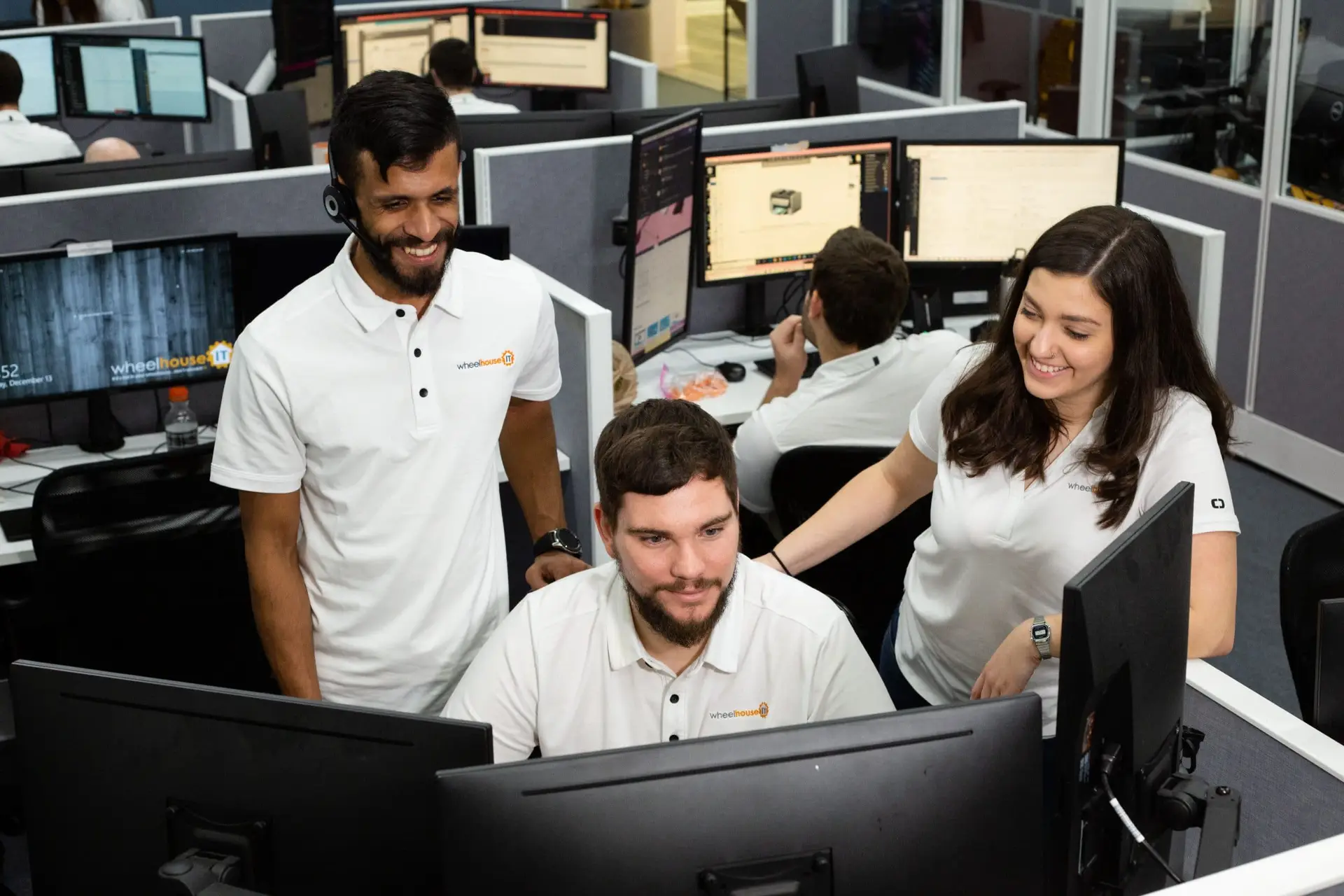
HIPAA compliance at 200 staff across multiple sites isn’t a checklist. It’s the same checklist enforced consistently in three places, with documentation a regulator can actually read. We run a HIPAA-aligned framework with automated reporting, network auditing, encrypted backups, and policy documentation that holds up to inspection. Our SOC 2 posture means the controls protecting your patient data are themselves auditable, not asserted. The point is to stop scrambling the week before an inspection.
Most practices at this size find out their MDR coverage is thinner than they thought the day something gets through. Ours is built around 24/7 monitoring from an internal NOC team, not an offshored queue, backed by across our client base. Disaster recovery as a service means automated backups, encrypted storage, and tested restoration plans on a real cadence. When something does go sideways, critical systems come back in minutes and patient care doesn’t stop.
Helpdesk, network infrastructure, server and workstation management, firewall, Microsoft 365 Business Premium administration, end-user training, MDR, DRaaS, and network auditing all land on one fixed per-user fee, billed monthly. No project-by-project invoicing. No surprise charges when a printer eats a Friday. That predictability matters more at 100 to 250 employees than it did at 30, because the COO has to forecast IT spend a year out and the practice can’t absorb a $40K variance.
We support practices from 25 to 500 users, and most growth-stage transitions hit the same friction: licensing that didn’t scale, an EHR integration that worked for one site but not three, security policies enforced inconsistently across locations. We plan the architecture for where you’re going, not where you’ve been. Capacity, identity, network, and compliance get configured to absorb the next site without a re-engagement. The pod that knows your environment in month two is the same pod that knows it in year three.

15 minutes is all it takes to see if our approach aligns with your needs.
Call, chat, email, or fill out the form to be connected with a technical advisor.