
Most Long Island businesses are already in the cloud. The question is whether anyone is managing it or just paying for it.
If the Azure or Microsoft 365 bill climbs every quarter without an explanation, if the migration that started two budgets ago is still half finished, or if nobody can tell you who has access to what, that is not a cloud problem. That is a provider problem.







Our Long Island office is in Wantagh, and the engineers who manage your cloud environment work here. Nassau and Suffolk companies don’t get routed to a reseller’s ticket portal or an account manager who needs your tenant re-explained every time. You get a pod, technicians plus an account manager assigned to your account, and they already know how your workloads are built and where they live.
We have been running managed cloud for clients since the early 2000s, long enough to have seen every way a migration stalls and every way a bill drifts. For workloads that belong on infrastructure we control, we host in our own data centers with 24/7 monitoring, managed backups, and written SLAs. For workloads that belong in Azure or Microsoft 365, we architect and manage them there. The recommendation follows the workload, not the product we would rather sell. If you have internal IT, the pod handles cloud administration, licensing, and monitoring around them without displacing anyone. If you’re replacing a provider outright, we document the environment from day one.
On Long Island, cloud is also a continuity decision. Nor’easters, coastal flooding, and the power events that follow don’t schedule around your business, and moving workloads off a server closet in Nassau County only helps if recovery has been planned and tested. Before storm season we confirm that backups are current and restorable, that failover connectivity works, and that your team can reach what they need when the office is dark and the LIRR isn’t running.
 Excellent
4.8201 reviews
4.8Excellent201 reviewsPosted on Google
 Aiyana Valdez9 days agoPosted on Google
 IDALIA MURILLO14 days agoRyan is highly professional, provides excellent customer service, and resolves issues promptly.Posted on Google
 darcel gray26 days agoOmg the food is so flavored I had lasagna.Posted on Google
 Alex Cruz26 days agoWe had an urgent server issue that prevented several employees from working. WheelHouse IT responded immediately and had us operational again much faster than anticipated. Their communication during the incident was excellent.Posted on Google
 Brent S. S. Ingraham35 days agoPosted on Google
 Emilio Martinez35 days agoWheelHouse IT has been great to us over the years! Their response time is awesome, they really know their stuff and are always ready to help. When we had a major incident they worked around the clock and got us back up and running ASAP. Really appreciate everything you guys have done for us, definitely recommend! :)Posted on Google
 Carolyn Goldberg41 days agoPosted on Google
 Syed Sarwar Hussain MD58 days agoI am thankful for wheelhouse for their help and support, making my job easierPosted on Google
 Nicole Stenger59 days agoGreat job IT! Thank you as always!Posted on Google
 Gerry Cruickshank62 days agoOur healthcare organization needed an IT provider that understood security, compliance, and the importance of keeping our systems available throughout the day. WheelHouse IT has been reliable and quick to respond whenever an issue arises. Their team communicates clearly and works efficiently to minimize interruptions to our staff and patients.Posted on Google
 Charles Douglas63 days agoWheelHouse IT helped our law firm improve its cybersecurity, Microsoft 365 environment, and data backup procedures. Their team explained everything clearly and worked around our court schedules and client meetings. We now feel much more confident that our sensitive information is properly protected.Posted on Google
 Ricky Gordon66 days agoBest Tech Support Team Ever!!! Being a client since 2018, we have enjoyed rapid responses and 100% success. Our monthly contract fee has become an essential premium assuring our stress-relieving comfort for our technological needs.Posted on Google
 Nicola Mitchell71 days agoAs a busy law firm, we cannot afford extended downtime or delays accessing client files. WheelHouse IT has been responsive, professional, and careful about keeping our systems secure. Their technicians understand the importance of confidentiality and resolve issues without disrupting our attorneys and staff.Posted on Google
 Ralph73 days agoPosted on Google
 I Murillo91 days agoPosted on Google
 Omar Taylor92 days ago
Almost every Long Island client who moved their cloud management to us described one of the six situations below first. In most cases nothing had actually failed. The environment had simply grown for years without anyone holding a current picture of it, and the previous provider had been invoicing for it the whole time. That isn’t bad luck. That’s a provider who stopped managing and started forwarding.
Subscriptions accumulate. A storage account here, a virtual machine somebody spun up for a project that ended in 2023, three SaaS tools doing the same job in three departments. Without an inventory you can’t right-size anything, and you’re paying every month for resources nobody has opened in two years.
Consumption pricing rewards attention and punishes its absence. Oversized instances, unused licenses, orphaned storage, and egress charges compound quietly. A provider who never brings you a cost conversation isn’t managing your cloud. They’re passing the invoice through with a markup.
A half-finished migration is the most expensive place to sit, because you’re paying to run both environments and getting the benefits of neither. They stall on the same things every time: an application nobody wants to touch, a dependency nobody mapped, or a project owner who left. We map dependencies before we set a timeline, not after one slips.
Cloud was supposed to make capacity planning easier, not opaque. You should be able to see utilization trends, cost by workload, and where performance is degrading, in a form your finance team can read alongside your technical team. We report on all of it, quarterly and on request.
Platform redundancy is not the same as recoverability. A deleted SharePoint library, a corrupted database, a compromised account, or a lapsed license all produce data loss that redundancy does nothing about. A backup that has never been restored is a job that reports success. We validate restores on a schedule and document the results.
Cloud permissions accrete faster than anyone reviews them. Guest accounts from a finished project, shared links with no expiry, admin rights granted “temporarily” three years ago. It’s the finding auditors reach for first because it’s the one they almost always find. We enforce conditional access and MFA policy and remove access on the day someone leaves.
Not all cloud providers are built the same, and many resell a platform without operating anything. Here’s how our structure addresses the gaps that cause most Long Island companies to switch in the first place.

For the workloads we host, the infrastructure is ours, monitored 24/7 by our own internal NOC across our US network operations locations. It isn’t outsourced overseas, and it isn’t a reseller arrangement where “support” means opening a ticket with someone else and waiting.
Your dedicated pod includes technicians and an account manager who know your architecture, your applications, and your people. When something degrades at 8am on a Monday, nobody is reading your environment for the first time while your team waits.
Cloud management is a fixed monthly cost with defined service levels, separate from platform consumption. Maintenance, vendor management, and response times are covered in the fee. You’re never choosing between calling for help and controlling spend, which is the tradeoff that makes people stop calling.
Month-to-month programs are available for qualified new clients. Cloud arrangements are unusually easy to coast on, and a term that renews itself is how that happens. This one has to earn renewal every month.
Tenant-to-tenant consolidations after an acquisition, server-to-Azure moves, on-premises file shares to SharePoint, and hybrid environments that need to stay hybrid. We have done enough of these to know where they go wrong.
We start by mapping dependencies. Which applications talk to which systems, which licenses are tied to hardware, which vendors won’t support their product in a cloud environment, and which workloads shouldn’t move at all. You get that assessment before a timeline, not after one slips.
Then the work runs in defined phases with a named owner on each, rollback planned in advance, and your users told exactly what changes and when. If something belongs on premises or in a hosted environment rather than in a public cloud, we’ll say so. Not every workload has a cloud business case, and pretending otherwise is how migrations end up half done.
Disaster Recovery as a Service with defined recovery time objectives, so you know how long recovery takes before the day you need to know. Restores are tested on a schedule rather than assumed, and the results are documented where your insurer or auditor can read them.
Continuity also covers the parts that aren’t technical: runbooks your team can follow, communication protocols for when systems are down, and staff who have actually run the drill. When a nor’easter takes out power across the South Shore or flooding closes the office, your people should be working from home on the same files and applications by the time the coffee is made.
Stay compliant with industry-specific regulations like HIPAA, FINRA, GDPR, and more with our specialized compliance solutions.
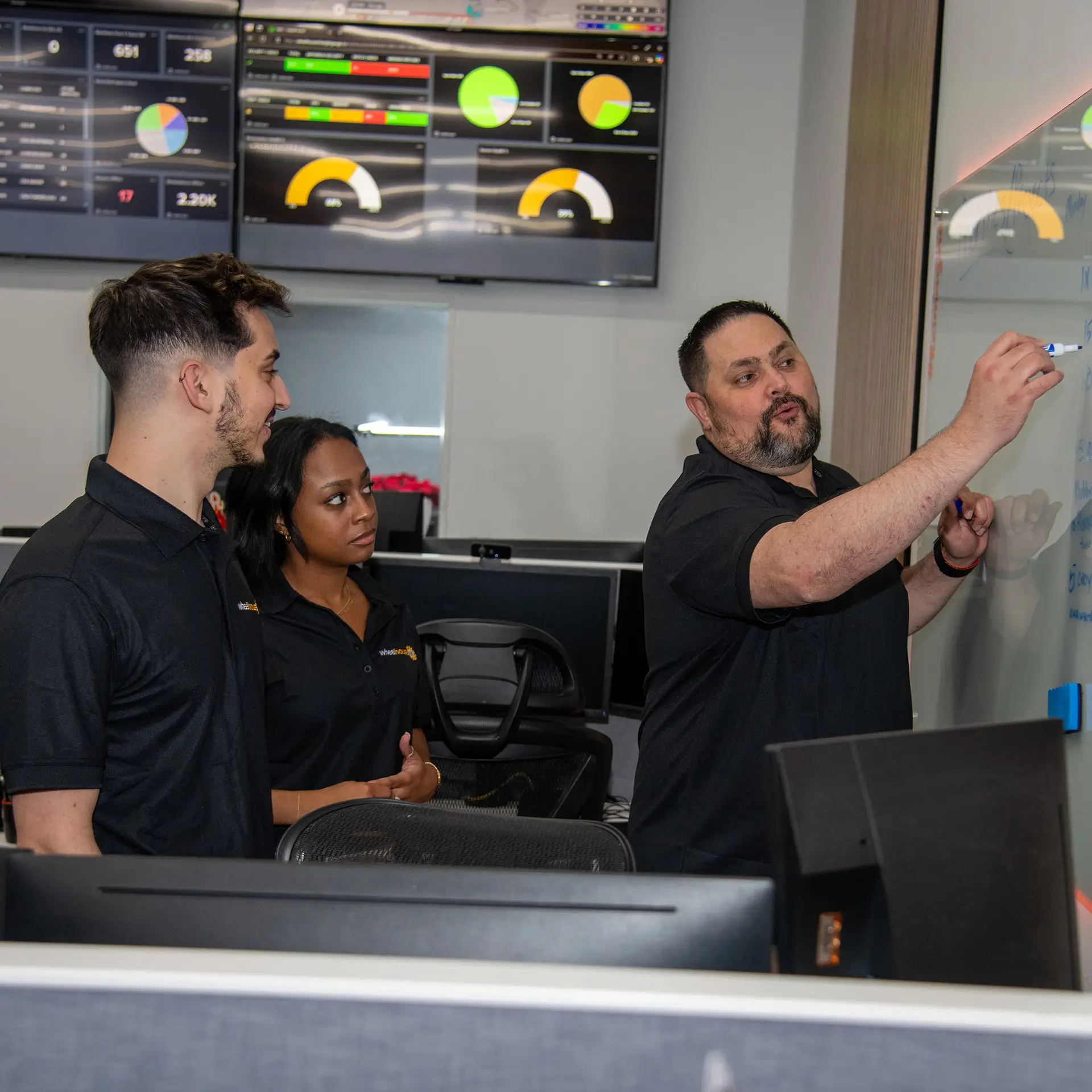
Use AI-driven analytics from our dashboard platform to optimize IT resources, predict downtime, and enhance learning experiences. Automated insights help educators focus on students, not servers.
Support for industry-specific applications and integration with specialized software platforms your business relies on.
Examined under SOC 2, with CrowdStrike EDR on the endpoint and Huntress for managed detection and response, backed by 24/7 SOC coverage. In a cloud environment the controls that matter most are identity and access: MFA enforcement, conditional access policy, privileged access review, and offboarding that removes access the day someone leaves. Annual penetration testing and continuous vulnerability scanning cover the rest, so the environment is watched continuously instead of audited once a year.

Most companies don’t change cloud providers because something broke. They change because they realized nobody had looked at the environment in two years. We’ve taken over cloud environments from other providers many times, and we handle the handoff without asking your team to project-manage it.
What you’re running, what it costs, and what it’s for. The first deliverable, not something promised for later.
Quarterly reviews cover utilization, spend trends, and what to consolidate. Right-sizing happens on a schedule instead of after a budget meeting goes badly.
Your pod picks up in about 52 seconds and resolves most tickets in 29.6 minutes, because they aren’t learning your environment on the call.
Defined recovery objectives, restores validated on a schedule, and documentation you can hand to an auditor or an insurer without assembling it first.
15 minutes is all it takes to see if our approach aligns with your needs.
Call, chat, email, or fill out the form to be connected with a technical advisor.